





|
|
 |
 |
 |
 |
 |
 |
 |
 |
 |
 |
 |
 |
 |
 |
 |
 |
 |
 |
 |
 |
 |
 |
 |
 |
WORLDCOOK'S TRAVELS - SUNDARBANS Bangladesh |
|
 |
Recipes from Bangladesh |
 |
Travel to Bangladesh |
 |
Travel to other countries |
|
|
|
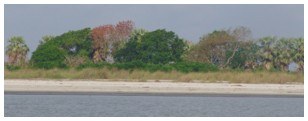
The word “Sundarban” most probably comes from the Bangla word for “beautiful forest”. A large part of the forest is made up of Sundari trees. The Sundarban mangroves surround the Ganges delta and are the largest mangrove area in the world. One third of the area belongs to India, two thirds to Bangladesh – the mangrove trees don’t care much about borders, and neither do the animals living there. Everywhere you can see their roots coming up through the soil; as the soil is very muddy, almost no oxygen comes through and this is the way the trees can still breath. The walking does not get any easier, though. |
|
|
|
The Sundari tree grows in saline waters and has very hard wood, two qualities that make it excellent boat material and liable to illegal cutting. The animals are also at risk because of our human interests. Poverty makes it almost impossible to implement the environmental laws. If you have nothing to eat, it is hard to lie awake over the continued existence of a mangrove forest, however beautiful it may be. |
|
|
|
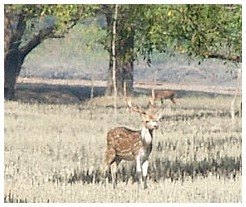
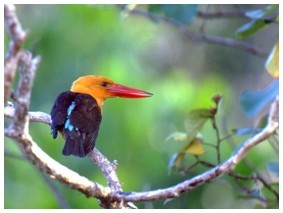
More than 250 bird species are
present in the Sundarbans, about 40 mammal species and many reptiles. We
saw many spotted and barking deer (and heard them) and different birds.
Most birds are beautifully colored and sing different songs. We have seen
very small birds like different kingfishers and woodpeckers, but also
large ones like herons and eagles. |
|
|
|
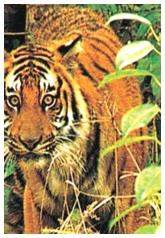
We did not see the Royal Bengal
Tiger, no matter how big it may be. But its traces were everywhere. We say
the imprints of its paws on the beach, and traces of its nails on the
trees; and of course tiger faeces, a famous subject of research. From
there, biologist came to know that tigers do not really like human flesh
on the menu. They prefer deer and wild boar, and an occasional fish. Only
when they are very old and too slow to catch real animals, they go for the
humans now and then. |
|
|
|
Shrimp
hatching is a major activity in the Sundarbans. Where there were once rice
fields near to the coast, now there are shrimp farms. Sometimes micro-credit is given to start up such farms. But often, better-off
entrepreneurs buy the land from rice farmers. Sometimes they also lease it
for a small amount. They put the land under a layer of saline water, thus
decreasing the rice harvest for the neighboring land, which gives them the
opportunity to buy this land cheaply and extend their shrimp farm. The
leased lands
|
|
|


 become unusable for any kind of agriculture, and thus the
lease-price remains low. The income from shrimp hatching is better than
from rice-growing but it is far less work-intensive, and many people become jobless. The
unemployed rice farmers turn
themselves into shrimp fishers; the shrimp after all do not grow by
themselves on former rice fields and have to come from somewhere. They
catch the shrimp larvae, thin as a hair, with a sort of mosquito net from
the waters of the Sundarbans. From all animals they catch, maximally one
out of a hundred is a shrimp; all the others die and get discarded. The
shrimps are transported to the farm. Unfortunately, the fishers are no
shrimp expert and don’t have the proper equipment, so only one percent of
the shrimps survive and reach the farm. The existence of the shrimp down
here is endangered. Obviously, catching shrimp is a forbidden activity in
the Sundarbans. But the wages of government officials are so low, that
their opinion is easy to influence.
become unusable for any kind of agriculture, and thus the
lease-price remains low. The income from shrimp hatching is better than
from rice-growing but it is far less work-intensive, and many people become jobless. The
unemployed rice farmers turn
themselves into shrimp fishers; the shrimp after all do not grow by
themselves on former rice fields and have to come from somewhere. They
catch the shrimp larvae, thin as a hair, with a sort of mosquito net from
the waters of the Sundarbans. From all animals they catch, maximally one
out of a hundred is a shrimp; all the others die and get discarded. The
shrimps are transported to the farm. Unfortunately, the fishers are no
shrimp expert and don’t have the proper equipment, so only one percent of
the shrimps survive and reach the farm. The existence of the shrimp down
here is endangered. Obviously, catching shrimp is a forbidden activity in
the Sundarbans. But the wages of government officials are so low, that
their opinion is easy to influence. remembers his
mother’s wise words and calls to Bon Bibi, who immediately comes out to
rescue him. She sends him back to his mother, tied onto a crocodile,
loaded with gifts.
remembers his
mother’s wise words and calls to Bon Bibi, who immediately comes out to
rescue him. She sends him back to his mother, tied onto a crocodile,
loaded with gifts.