| |
- 400 GRAM
BEEF, in cubes
- 250 GRAM RICE
- 1 ONION, chopped
- 2 CLOVES GARLIC, chopped
- PIECE OF GINGERROOT, chopped finely
- 1 GREEN CHILI, chopped finely
- 1 CUP YOGURT
- 1 TBSP SUGAR
- 1/2 TSP CUMIN SEEDS
- 1/2 TSP CINNAMON POWDER
|
|
- 150 GRAM RICE FLOUR
- 2 EGGS
- 200 GRAM CARROT, cut in strips
- 200 GRAM PRAWNS, shelled
- BUNCH OF GREEN ONIONS, chopped
- 100 GRAM BACON, cut in strips
- 100 GRAM MUSHROOMS, sliced
- 100 GRAM BEAN SPROUTS
- 100 GRAM LETTUCE, cut
-
CHILI SAUCE
|
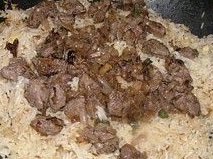
Fry the the onion, the chili, the garlic
and the cumin seeds three minutes in oil or ghee; add the beef and fry
until brown on all sides. Add the ginger, the sugar and the cinnamon
and stir well. Take the beef out and stir in the yogurt and the rice.
Add 2 1/2 cup water and salt to taste, stir once and put the lid on.
Simmer for 15 minutes, put the beef back on top and simmer 5 minutes
more.
In Bangladesh,
rice is the main staple, and also the main ingredient of biryani. The
word means fried or roasted. For biryani, you fry the ingredients and
then cook them, and for pullao, it is the other way around. Biryani
is a popular dish throughout South-East Asia, people love it in Myanmar
(where it is called "dan pauk"), in
Malaysia,
Indonesia
and India. Famous
varieties are Hyderabadi biryani and Kashmiri biryani. In
Bangladesh,
biryani is often part of ceremonies like weddings, and sometimes puffed
rice (muri) is used.
|
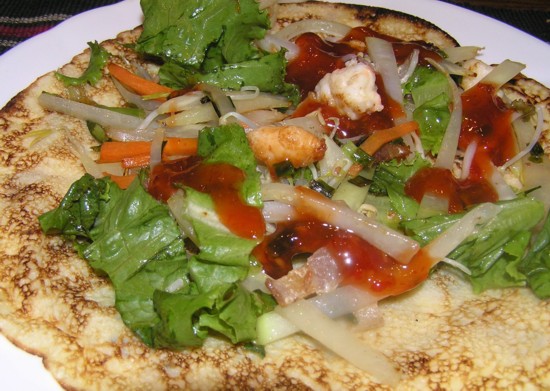
Mix the rice flour with the eggs and 2 cups of water
and bake 4 pancakes out of this batter. Fry the bacon two minutes, add
the prawns and fry three minutes more. Take this out of the pan, fry
the carrots, green onions and mushrooms 5 minutes, add the bean sprouts
and fry 1 minute more; stir bacon and prawns back in, add the lettuce
and distribute this mixture over the pancakes. Serve with chili sauce.
Happy pancake is also called "Hue pancake". Hue was
the former capital of Vietnam. The kings resided in this imperial city
and the cooks had to use many techniques and varieties to make the food
look especially attractive for royal consumers. Long lasting dinners
with many small dishes were popular in those days.
A good day to serve Happy Pancake is the 2nd of
September, when in
1945 Vietnam became independent after a long famine. Click on
culinary calendar for more links
between cooking and history.
|