|
|

Filipino
recipes

Recipes
with bananas
|

New Year
recipes |
|

Korean
recipes

Japanese
recipes
|
|

|

Recipes
with cabbage |
| |
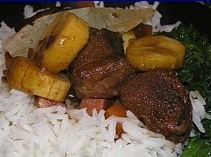
Estofado
|
|
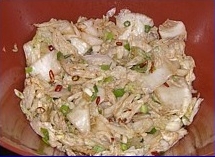
Kim Chi / oshinko
|
| |
- 500 GRAM PORK
FOR ROASTING, in cubes
- 2 BANANAS, sliced
- 1 ONION, chopped
- 4 CLOVES OF GARLIC, mashed
- 100 GRAM VINEGAR
- 100 GRAM SOY SAUCE
- 75 GRAM SUGAR
- 2 CARROTS, in cubes
- 2 SLICES OF BREAD
or PAN DE SAL,
in large cubes
|
|
- 1 CHINESE CABBAGE, cut in bite size pieces
- 75 GRAM SALT
- 1/2 TSP CAYENNE PEPPER
- BUNCH OF SPRING ONIONS, chopped
- 2 CLOVES GARLIC, mashed
- PIECE OF GINGERROOT, grated
- 2 RED CHILIES, chopped
- 1 TBSP SUGAR
- 1 TBSP VINEGAR
|
Fry the onion and the
garlic 5 minutes in oil. Add the pork and fry until it is brown on all
sides. Mix the soy sauce with the vinegar and the sugar and add to the
pork. Simmer for 15 minutes; add the carrot and simmer 10 minutes more.
Add the banana and the bread and heat until all is thoroughly hot.
|
Put a layer of cabbage
in a bowl and sprinkle with salt, put again a layer of cabbage and sprinkle
with salt; repeat until salt and cabbage have finished. Put a plate
on top with a heavy weight on it and leave the bowl for 5 days. Rinse
the cabbage very well with cold water and stir in all the other ingredients.
Kim chi comes from chimchae, meaning preserved vegetables
with salt. In the early days (12th century) it was made with only salt,
but later on, probably red pepper was added and the amount of salt diminished,
as salt was very expensive.
The process is similar to making
sauerkraut, which we
did in Uzbekistan
with white cabbage and salt, only it takes more time.
Kim chi is served on Seollal, Korean New Year,
which is celebrated between mid
January and mid
February.
On Worldcook's New Year page
you will find New Year recipes from all over the world.
|